Yves Simon · 4 September 2026
Global Researchers Assemble in Krakow to Explore Quantum Technologies for Environmental Challenges
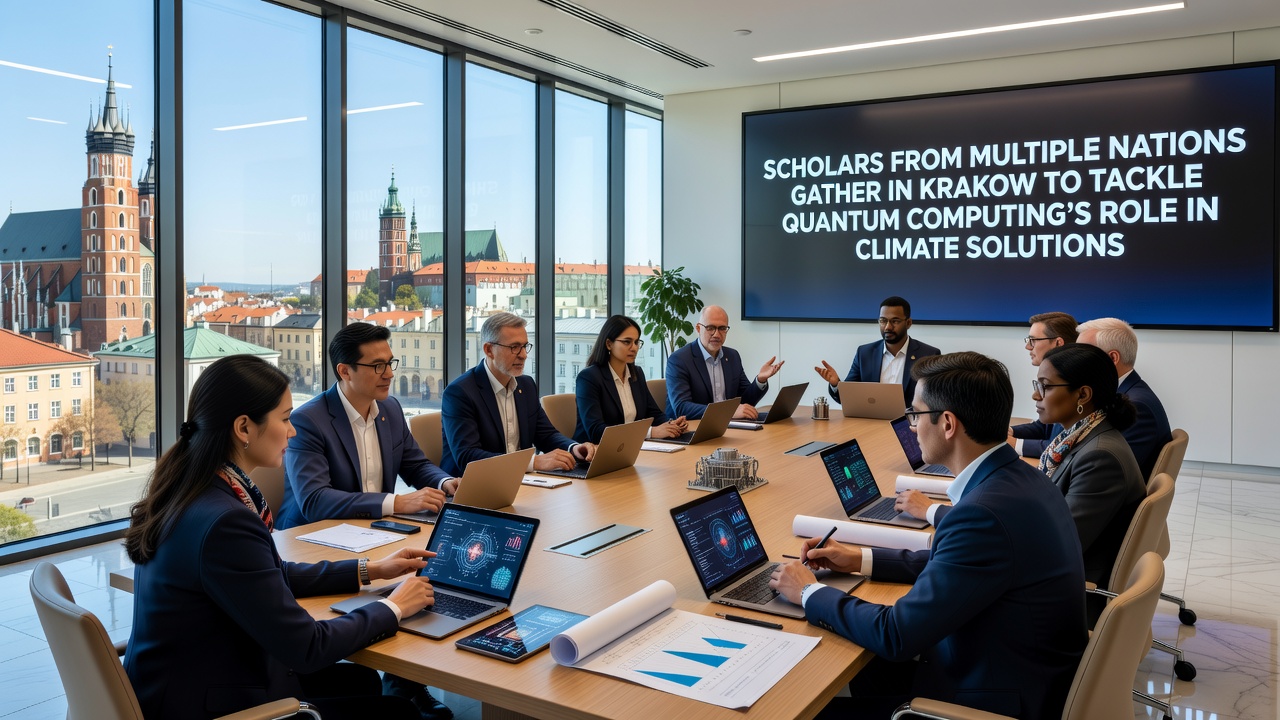
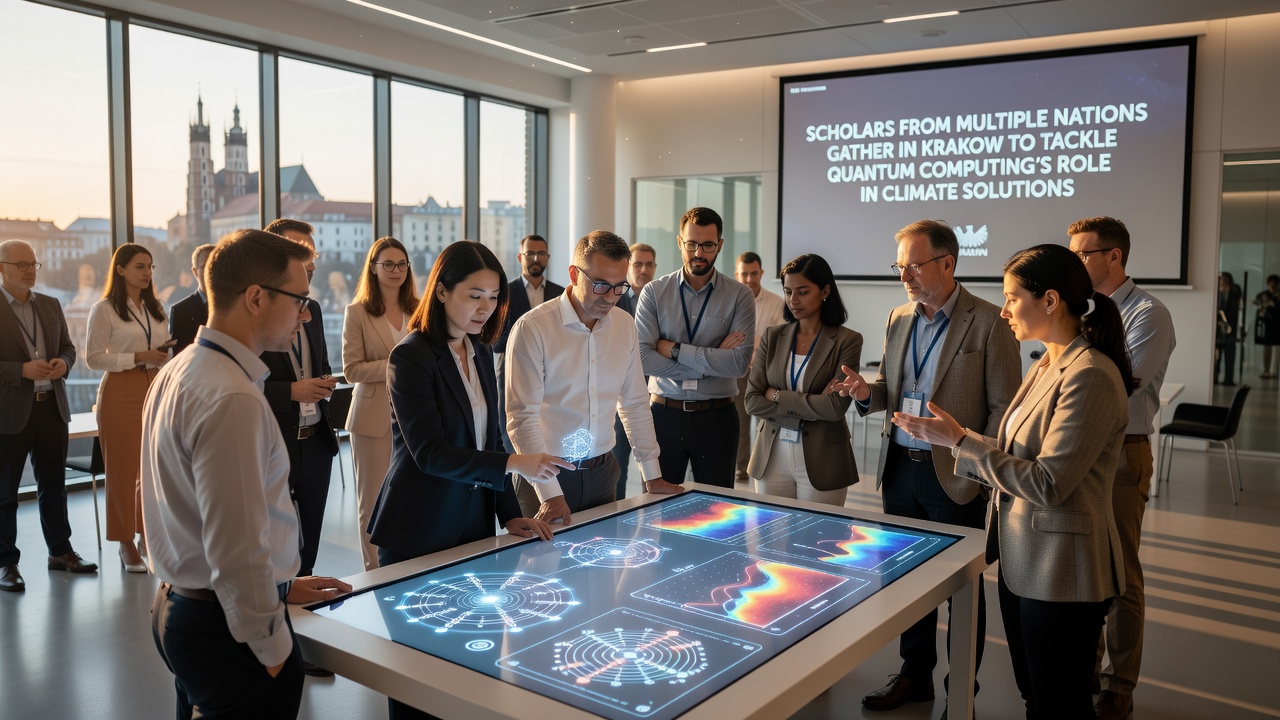
Researchers representing institutions across Europe, North America, and Asia convened in Krakow during September 2026 to examine how quantum computing might advance climate modeling and mitigation strategies, and the event brought together physicists, climate scientists, and computer engineers for a series of workshops and presentations focused on practical applications rather than theoretical speculation.
Event Background and Participation
Organizers from several Polish academic centers coordinated the gathering, which drew over 200 participants from more than 30 countries, while sessions covered topics such as quantum algorithms for atmospheric simulations and optimization problems in renewable energy grids, and attendees included representatives from national laboratories in the United States, Germany, Japan, and Canada along with early-career researchers from emerging programs in South Korea and Brazil.
Discussions centered on the computational demands of current climate models, which often require weeks or months on classical supercomputers, and quantum approaches promise reductions in processing time for certain calculations involving molecular interactions in carbon capture materials or fluid dynamics in ocean circulation patterns.
Technical Presentations and Research Highlights
One series of talks addressed variational quantum eigensolvers applied to molecular modeling for new catalyst development, and researchers presented preliminary benchmarks showing potential speedups in identifying stable compounds for direct air capture systems compared with traditional density functional theory methods run on conventional hardware. Another panel explored quantum machine learning techniques for processing satellite data on deforestation and ice sheet changes, with examples drawn from ongoing projects that integrate quantum-inspired methods into existing workflows at meteorological agencies.
Evidence from pilot studies indicated that hybrid quantum-classical frameworks could handle the combinatorial complexity of energy distribution networks more efficiently, particularly when factoring in variables like weather variability and storage constraints, and data shared during the conference showed test cases where such models achieved convergence in fewer iterations than classical counterparts alone.
Collaborative Frameworks and Funding Pathways
Breakout groups focused on establishing shared benchmarks and open-source toolkits to standardize testing of quantum climate applications, and participants agreed to form working groups that would continue virtual meetings after the event, with plans to submit joint proposals to international funding bodies. Reports presented at the conference referenced ongoing investments by government agencies in quantum research infrastructure, including initiatives supported through the European Union's Horizon programs and parallel efforts at the US Department of Energy that prioritize cross-disciplinary teams working on environmental challenges.
Those involved noted the importance of access to intermediate-scale quantum processors for running realistic climate-related simulations, and several national representatives outlined timelines for new facilities expected to come online by 2028 that could support larger experiments in this domain.
Challenges and Next Steps Identified
Attendees also examined current limitations, such as noise in quantum hardware that affects accuracy for long-running computations, and they discussed error mitigation strategies tailored to climate datasets where precision in tail-end probability estimates matters for risk assessment. Case examples from existing collaborations demonstrated how teams combined quantum outputs with classical post-processing to produce usable projections for policymakers.
Future activities outlined include follow-up workshops scheduled for 2027 and a shared repository for datasets used in quantum climate experiments, while observers from funding organizations emphasized the need for measurable milestones tied to reductions in model uncertainty rather than hardware milestones alone.
Conclusion
The Krakow gathering provided a structured platform for advancing concrete research agendas at the intersection of quantum information science and climate analysis, and outcomes included commitments to joint publications and prototype development that will undergo testing over the coming years. Continued progress depends on sustained coordination among the participating groups and integration of findings into broader climate research communities worldwide.