Yves Lange · 16 October 2026
Rural Connectivity Hurdles Spark Fresh Alliances Between Tech Innovators and University Teams Across Regions
Researchers across multiple continents have documented persistent gaps in broadband access that affect rural communities, and data from government agencies shows that these shortfalls continue to drive new collaborations between technology companies and academic institutions. Studies indicate that regions with sparse populations often face higher deployment costs for fiber optic networks, while satellite and wireless alternatives encounter terrain-related limitations that reduce reliability during peak usage periods.
According to figures released by the Federal Communications Commission in the United States, approximately 14 million rural residents lacked access to adequate broadband speeds as of late 2025, and similar patterns appear in reports from the European Commission covering remote areas of Eastern and Southern Europe. These statistics have prompted technology firms to seek partnerships with universities that maintain expertise in network engineering, signal processing, and community deployment models.
Regional Data Reveals Scale of Infrastructure Gaps
Evidence from the Australian Bureau of Communications and Arts Research highlights that remote outback stations experience download speeds below 10 megabits per second in more than 30 percent of surveyed locations, whereas urban centers maintain averages exceeding 100 megabits per second. Canadian regulatory filings from Innovation, Science and Economic Development Canada echo these findings, noting that First Nations communities in northern provinces encounter service interruptions that disrupt both education platforms and telemedicine applications. Observers note that such disparities create measurable differences in economic outcomes, including lower rates of small business formation and reduced participation in online training programs.
University teams in these countries have begun supplying detailed mapping data and pilot testing environments that allow innovators to refine equipment designs before full-scale rollout. One project coordinated through an Australian research consortium used machine learning algorithms developed on campus to predict signal degradation caused by seasonal weather shifts, and the resulting adjustments improved uptime by measurable margins during field trials conducted in 2026.
Partnership Models Emerge in October 2026
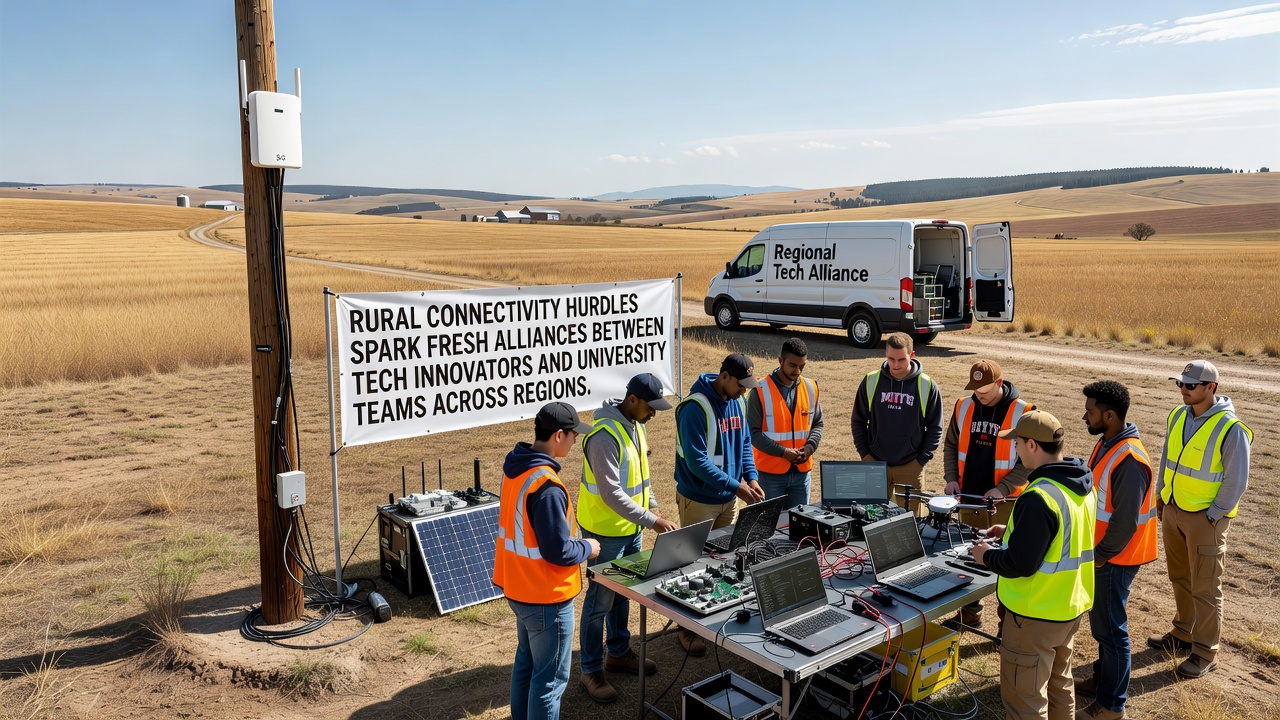
By October 2026 several formal alliances had been announced that pair corporate research divisions with university laboratories focused on low-cost hardware solutions. These arrangements typically include shared access to test beds located on agricultural campuses, where real-world conditions such as distance from towers and interference from vegetation can be measured directly. Data collected during these sessions feeds back into iterative product development cycles that emphasize durability alongside performance metrics.
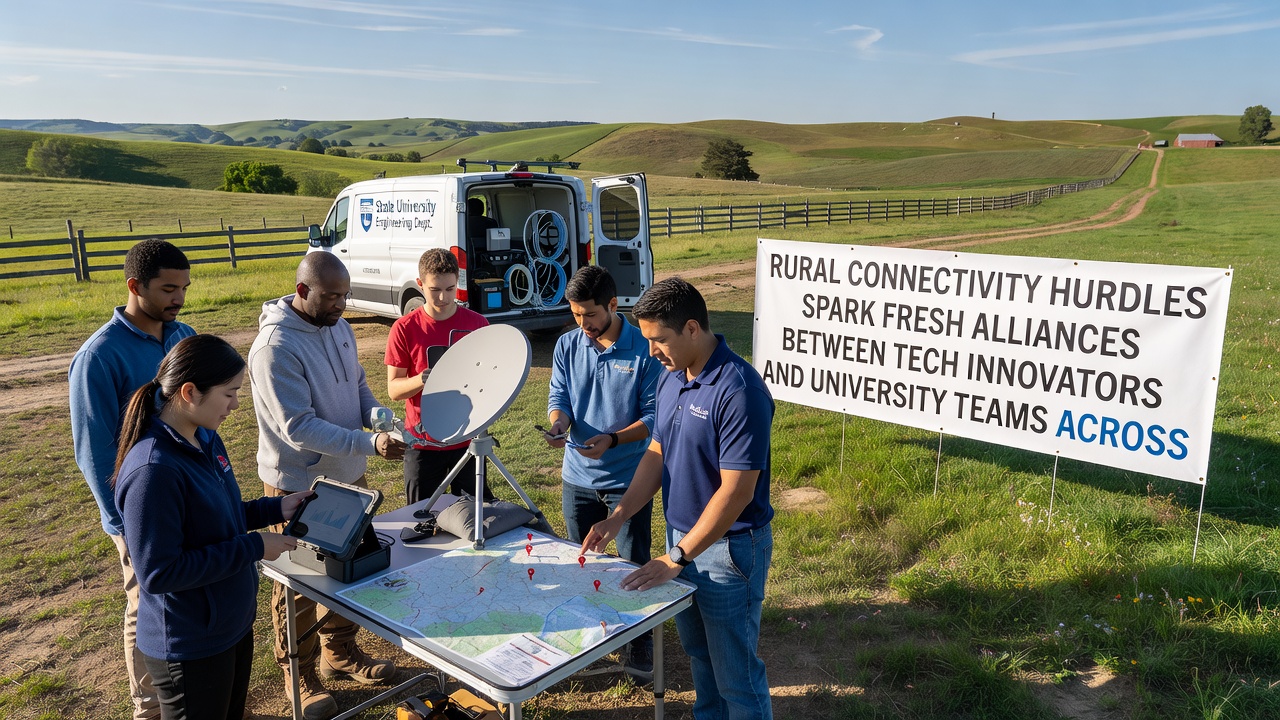
Reports from the International Telecommunication Union indicate that hybrid approaches combining fixed wireless access with emerging low-earth orbit satellite constellations have shown promise in initial deployments across parts of Africa and South America. Academic contributions in these regions often center on spectrum management techniques that minimize interference while maximizing throughput for multiple simultaneous users. Researchers at institutions in Brazil and Kenya have published peer-reviewed analyses documenting how localized antenna placement strategies reduce latency compared with centralized tower configurations.
Funding Mechanisms Support Cross-Border Initiatives
Government grants and industry matching funds have provided the financial backbone for many of these alliances, with disbursement records showing increased allocations toward projects that explicitly involve academic partners. The structure of these programs frequently requires milestones tied to independent verification by university statisticians, which adds layers of accountability to progress reports. Figures from the European Union's Horizon Europe framework reveal that connectivity-focused calls issued in 2025 attracted proposals from consortia spanning at least three member states, each incorporating at least one higher education institution.
Technical challenges addressed in these efforts range from power consumption optimization for off-grid relay stations to adaptive routing protocols that reroute traffic during outages. University engineering departments contribute specialized knowledge in areas such as antenna miniaturization and edge computing architectures, while technology companies supply manufacturing scale and distribution networks once prototypes demonstrate viability. The exchange produces documented improvements in both hardware reliability and software efficiency, according to interim evaluations released by participating organizations.
Conclusion
Available evidence demonstrates that rural connectivity shortfalls continue to stimulate structured partnerships between technology innovators and university research teams, with activity levels remaining elevated through October 2026. Government statistics and academic publications together illustrate how data-driven collaboration has accelerated the testing and refinement of alternative network solutions across diverse geographic settings. These developments rest on measurable inputs from regulatory bodies, research institutions, and field deployments rather than isolated initiatives.