Yves Simon · 18 September 2026
Student-Led Initiatives Combat Digital Divides with Competitions and Collaborative Research
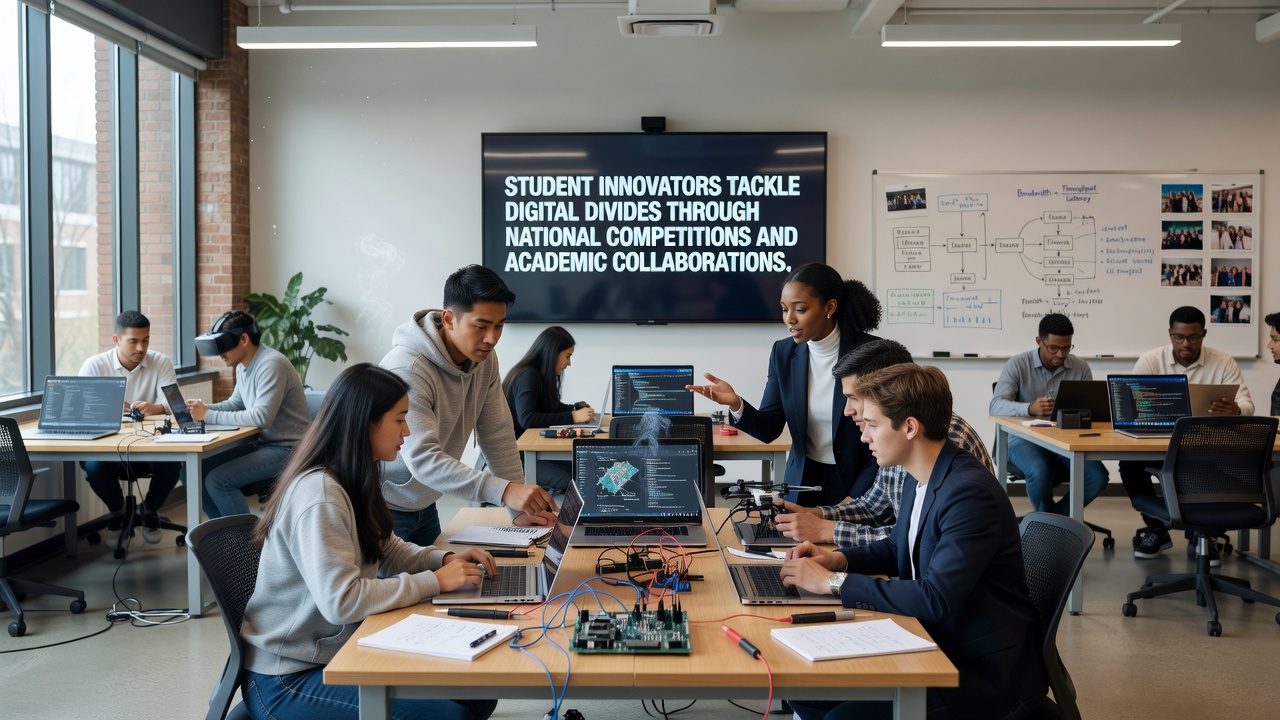
Student innovators across multiple regions have taken on the challenge of narrowing digital divides through structured national competitions paired with ongoing academic partnerships, and data from education ministries shows participation numbers climbing steadily since 2023. These efforts focus on practical solutions like affordable connectivity tools, community Wi-Fi networks, and accessible learning platforms that reach underserved areas where broadband access remains limited. Reports indicate that teams often develop prototypes during multi-week events before refining them through university labs and faculty mentorship programs.
National Competitions Drive Practical Solutions
Competitions organized at the national level bring together undergraduate and graduate students who compete to address specific connectivity barriers, and events scheduled for September 2026 already list over 150 registered teams from public and private institutions. Participants work on projects ranging from solar-powered routers for rural zones to mobile apps that optimize data usage for low-income households, while judges from government agencies and tech firms evaluate entries based on scalability and measurable impact. Figures from past rounds reveal that winning projects frequently secure seed funding and transition into pilot deployments within six months of the final presentations.
One study from a North American research consortium tracked outcomes from three consecutive competitions and found that 68 percent of submitted ideas reached at least prototype testing stages, with many incorporating open-source components to encourage wider adoption. Observers note that the format encourages cross-disciplinary teams, so computer science majors collaborate with sociology and education students to ensure solutions account for local usage patterns and cultural factors. The structure also includes workshops on grant writing adn regulatory compliance, which prepares participants for real-world implementation challenges.
Academic Collaborations Extend Project Lifecycles
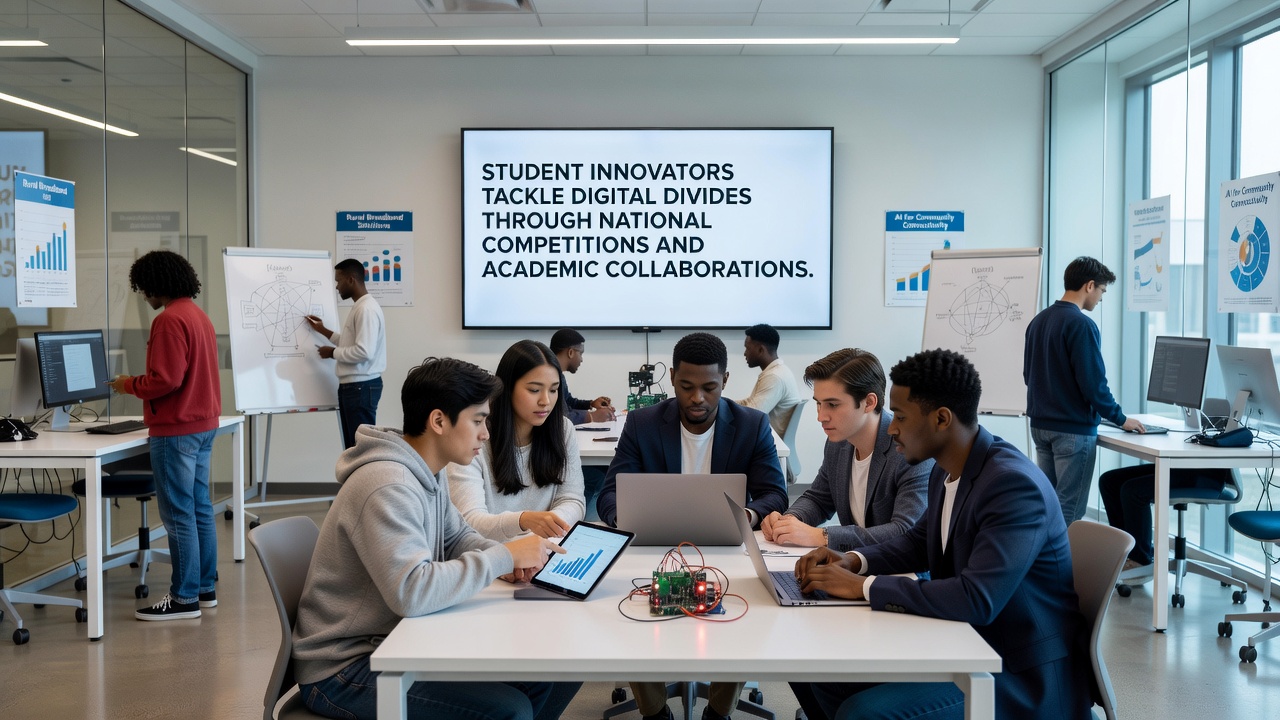
University partnerships play a central role once competitions conclude, as faculty advisors and research centers provide lab access, testing environments, and connections to industry sponsors. Programs at several institutions now integrate competition winners into semester-long capstone courses where students iterate on their designs under guided supervision, and this model has produced documented improvements in device durability and user interface simplicity. Data compiled by a European higher education network indicates that collaborative extensions increase the likelihood of securing follow-on grants by approximately 40 percent compared with standalone student efforts.
Researchers at participating universities often publish joint papers with student teams, which adds academic credibility and attracts additional resources. For instance, a 2025 report co-authored by competition alumni and faculty members detailed the deployment of mesh networks in three remote communities, showing sustained connectivity gains over twelve months. These publications also feed into curriculum updates, so future cohorts learn from documented successes and setbacks rather than starting from scratch each cycle.
Measured Outcomes and Geographic Reach
Tracking data released by an Australian government digital inclusion initiative highlights that projects emerging from similar student competitions have connected more than 12,000 households in regional areas between 2024 and 2025. Metrics collected through follow-up surveys show average increases in online education access and telemedicine usage, while cost-per-connection figures continue to decline as designs incorporate recycled hardware and community maintenance models. Partnerships with local governments help scale these efforts beyond initial test sites, creating feedback loops that inform subsequent competition prompts.
International exchanges between competition organizers further broaden geographic reach, allowing teams in one country to adapt solutions proven effective elsewhere. A recent agreement between North American and Asian university consortia established shared databases of open-source tools and case studies, reducing duplication and accelerating adaptation timelines. Analysts tracking these exchanges report that cross-border knowledge transfer has shortened average project development cycles from nine months to under six.
Conclusion
National competitions combined with sustained academic collaborations continue to generate targeted innovations that address digital divides in measurable ways, and upcoming events in September 2026 are expected to expand participation further. Evidence gathered from multiple regions demonstrates that student-driven approaches, when supported by institutional resources, produce deployable technologies and trained cohorts ready to sustain momentum. Ongoing data collection from government and research sources will clarify long-term effects on connectivity equity as these initiatives mature.